Video has become the default language of business. Product demos, training sessions, founder messages and customer stories all travel faster as video than as text, and every one of them can reach a larger audience if viewers can understand it. That is where video translation services come in. Yet many companies discover that translating a video is not the same as translating a document, and the choices they make early decide whether the result feels natural or awkward.
Subtitles, dubbing and voiceover: three different jobs
Most video translation projects use one of three methods. Subtitles show translated text at the bottom of the screen while the original audio plays. Dubbing replaces the original voices with new ones, often matched to the speakers' lip movements. Voiceover lays a translated narration over a lowered version of the original track, a style common in documentaries and corporate interviews.
Each method has a different cost, timeline and audience expectation. Subtitles are the fastest and cheapest, and they suit viewers who are used to reading. Dubbing feels most natural and works well for entertainment and children's content, but it takes longer and requires actors, studio time and careful script adaptation. Voiceover sits in between and keeps the original speaker audible, which helps with credibility in interviews and testimonials.
How subtitle translation really works
Good subtitle translation is closer to editing than to word-for-word conversion. Viewers can only read so many characters per second, so the translator has to condense speech while keeping its meaning and tone. A joke, an idiom or a cultural reference often needs a different solution in the target language. The Wikipedia article on subtitles explains how conventions for line length, timing and placement developed, and professional teams still follow them closely.
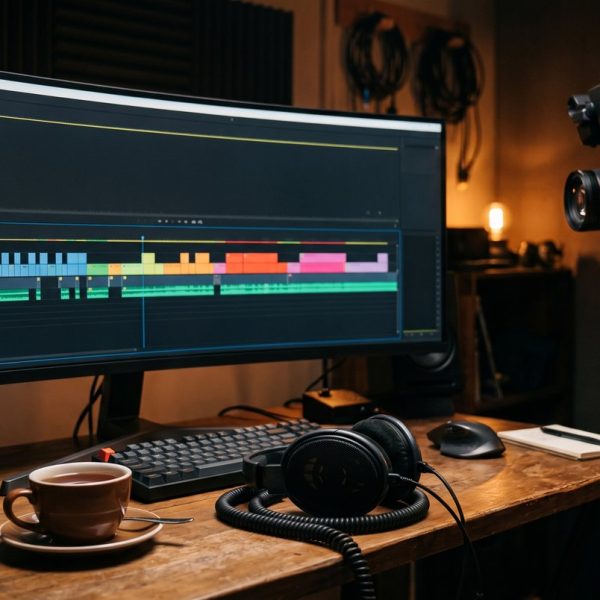
Timing matters as much as wording. A subtitle that appears too early spoils the moment and one that lingers too long blocks the picture. Skilled subtitlers work with timecodes, shot changes and reading speed limits so that the text feels invisible. If a provider quotes a very low price per minute, ask whether the timing is checked by a human or left to automation.
Where AI helps and where it does not
Human specialists still carry the parts of video work that machines handle worst. Tone, humour and cultural references need a translator who understands the audience, not just the words. For content aimed at Japanese viewers, that nuance is safest with professional
japanese translation services
A video translation app can generate a rough transcript and a first-draft translation in minutes, and that speed is genuinely useful for internal videos or quick previews. Automatic voice cloning and synthetic dubbing are improving fast too. The rise of AI dubbing is already changing how studios and marketers think about production schedules and budgets.
Still, public-facing content carries risk. Machines misread names, miss sarcasm and stumble over technical vocabulary, and a brand video with a mistranslated slogan can spread online for the wrong reasons. The sensible approach for most companies is a hybrid workflow: automated transcription and drafting, followed by review from a native-speaking linguist who also checks timing and terminology.
Prepare your video before it reaches the translator
The easiest way to cut cost and improve quality is to prepare the source. Provide a clean script or transcript, a glossary of product names and a note on tone. Keep on-screen text in editable layers, because text burned into the picture has to be replaced frame by frame. Speakers who talk clearly and avoid overlapping dialogue produce better subtitles in every language.
Plan for text expansion as well. German and Spanish usually run longer than English, so a tight on-screen graphic may need redesigning. If you intend to release the video in many markets, leave generous space in layouts and avoid baking cultural symbols into the footage that will not travel well.
Accessibility and the value of captions
Subtitles are not only about foreign languages. Many viewers watch with the sound off, in offices, on trains or in noisy places, and others rely on captions because they are deaf or hard of hearing. The W3C explains the difference and gives practical advice in its guide to captions and subtitles for web accessibility. Investing in good captions in your own language often improves engagement before you translate a single word.
Training, learning and long-form content
Companies with large libraries of training videos face a special challenge, because consistency across hundreds of modules matters as much as individual quality. For a closer look at how learning content moves between languages, this article on elearning localization for global learners covers the planning steps that keep a course coherent from the first lesson to the last.
Choosing a provider
When you compare video translation services, ask about the workflow instead of only the price. Who writes the translation, who checks timing, which file formats are delivered and how are corrections handled? Ask for a short test clip in your own subject area. A reliable provider will also discuss deadlines honestly and will tell you when a method does not fit your goals. Choose the approach that matches your audience, test with a short clip and build from there.